MVP mHealth app
Poshture
Role
UX/UI Designer
Team
Team of 1
Timeline
2 Weeks
Year
2024
Context
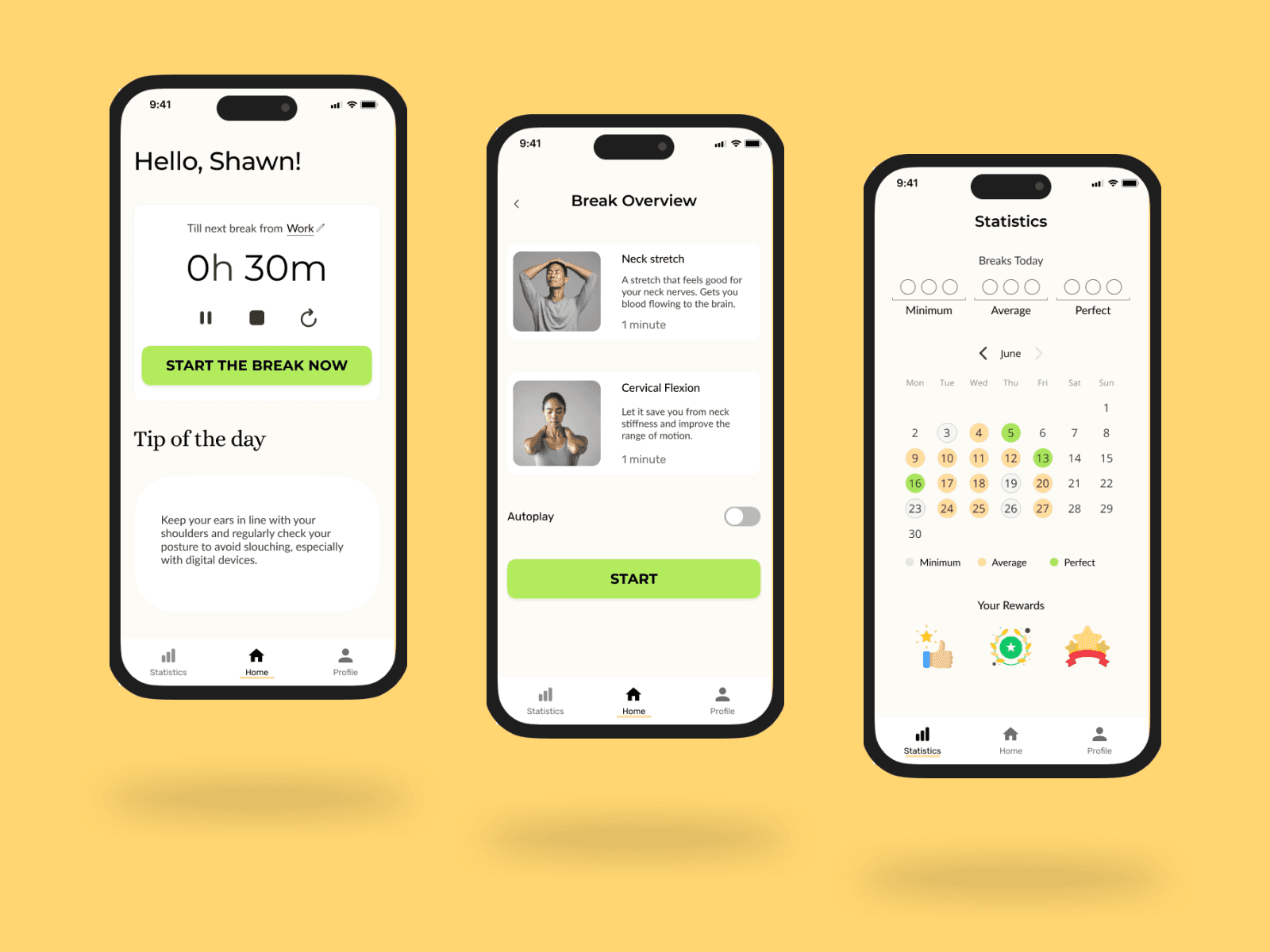
In today’s fast-paced, tech-driven world, poor posture has become a silent epidemic. As someone passionate about designing solutions that improve everyday life, I embarked on creating Poshture, a mobile app designed to help users improve their posture seamlessly. This project was an opportunity to blend health, technology, and intuitive design into a meaningful product.
Challenge
Posture-related issues are more prevalent than ever due to prolonged screen time and sedentary lifestyles. Many individuals are unaware of their posture habits until they experience discomfort or pain. Existing solutions often involve bulky devices or apps with poor user interfaces, making it hard for users to stay engaged.
In a world where our bodies are constantly adapting to the demands of screens and stillness, good posture often becomes an afterthought, until discomfort reminds us otherwise. With Poshture, I wanted to design a tool that gently supports users in reconnecting with their bodies through small, achievable actions, real-time guidance, and a style that feels more like a helpful coach.
The Process
The Research
Poor posture is a widespread issue with significant health and productivity implications.
1
Studies reveal that improper posture contributes to musculoskeletal disorders, which are among the leading causes of disability and reduced mobility in office workers. For example, 78% of surveyed office workers reported experiencing musculoskeletal pain, with 84% attributing it to awkward sitting postures during work hours. These issues are often exacerbated by poorly designed workstations and a lack of awareness about proper ergonomics
2
Poor posture has been linked to decreased productivity, with some studies showing up to a 66% reduction in efficiency among affected workers. This decline is attributed to increased fatigue, reduced concentration, and chronic pain, all of which negatively impact workplace performance.
3
Expected to worsen: Low back pain affected 619 million people globally in 2020 and is expected to increase to 843 million by 2050.
This research validated the need for Poshture: an app that integrates seamlessly into users’ lives while prioritizing simplicity and effectiveness.
The Market
I analysed existing solutions such as fitness apps and posture trackers. While some offered exercises or reminders, they lacked personalization and often felt disconnected from users' daily routines.
The User

Problem Statement
People who spend prolonged time at their computers and mobile phones need to incorporate preventive health measures because they experience short term stiffness, physical pain, fatigue, decreased focus, and long-term consequences on their blood circulation, physical appearance and mental health.
Ideation
The MVP for Poshture focuses on the following features:
Timely break reminders
- tailored to users' schedules and availability, these reminders encourage movement without disrupting workflows.
Easy-to-follow exercises (posture and back)
Personalized exercise sets, with detailed explanations and suited for various situations (e.g., work breaks), help reduce stiffness, pain, and fatigue, boosting well-being and productivity.
Long-term benefits
Regular activity breaks are analysed to showcase potential long-term benefits, encouraging users to stay engaged and committed.
Detailed reports about breaks
Reports demonstrate short-term effects of exercises (e.g., reduced stiffness) while highlighting targeted body parts for better engagement.
First Iteration: Wireframing and Concept Testing
Initial sketches were tested with 3 individuals to validate the ideas and gather their feedback. The ideas were generally well-received, and I gained new insights to work on.
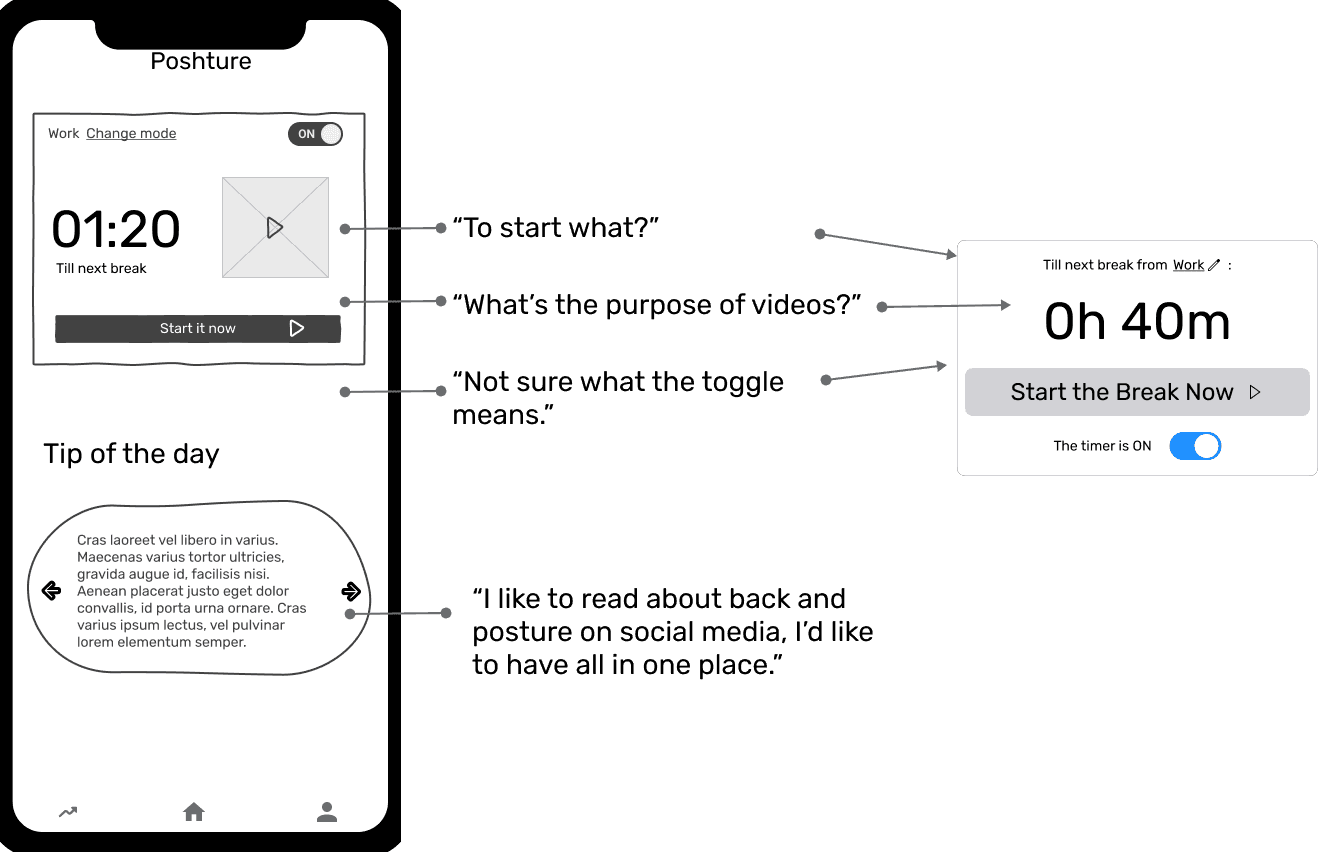
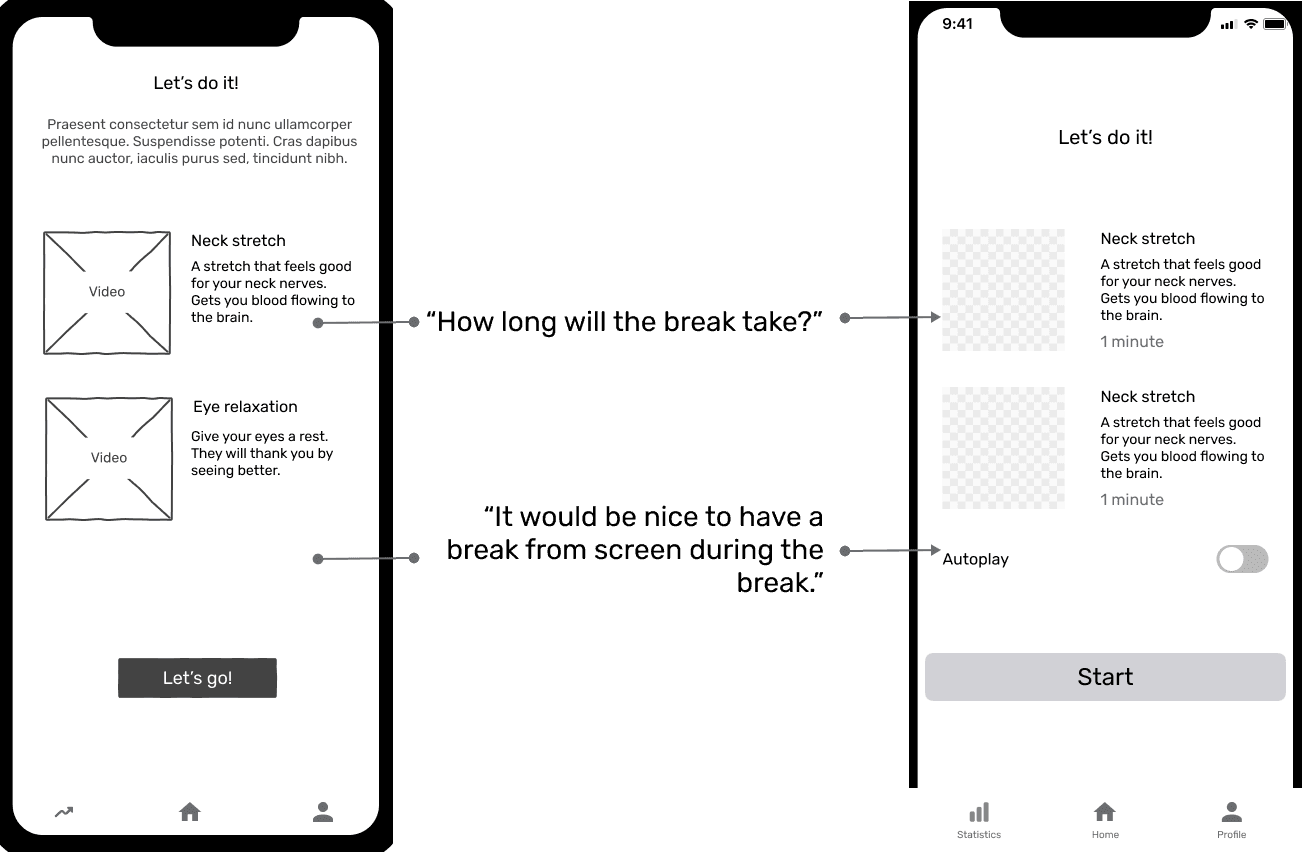
After designing mid-fidelity prototypes in Figma, I tested them with five participants who matched Shawn's profile to evaluate usability and gather feedback.
Key findings:
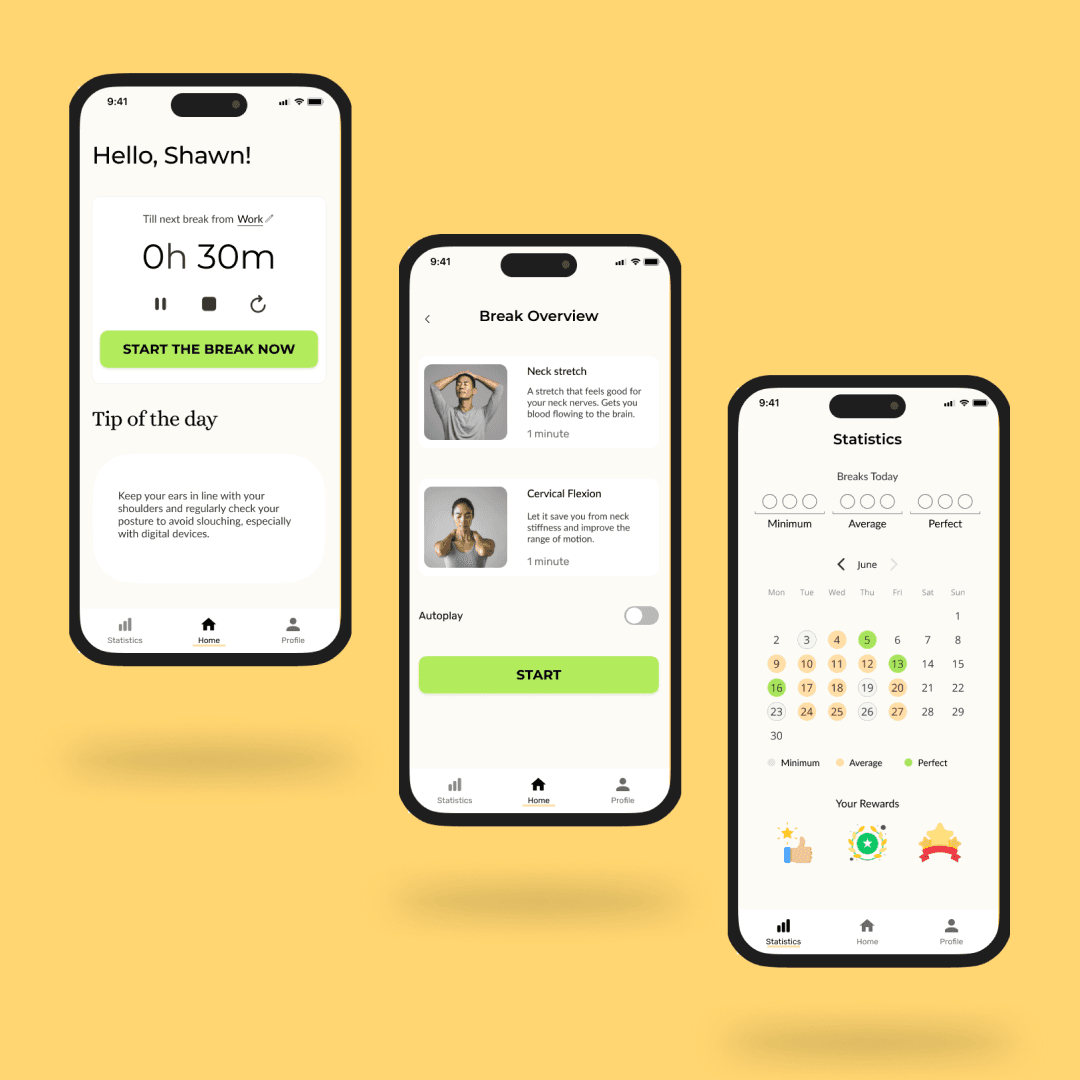
General User Flow: Testers found the main flow—creating a break schedule and completing exercises—intuitive and easy to follow.
Statistics Section: Users felt this section had too much unorganized text, making it difficult to digest. To address this, I redesigned it with more visual elements like graphs and charts to clearly display benefits from completed activities.
Timer Section: Participants found the timer confusing due to unclear labels. I reorganized this section for better usability by simplifying its layout and adding clear instructions.
These insights helped refine Poshture’s interface to ensure it was both functional and engaging for users.
Final Prototype
Learnings and Next Steps
This project taught me how small interventions, like timely reminders or short exercises, can spark meaningful change in users’ lives when designed thoughtfully. If I were to take Poshture further, I would:
Check with more “real” users
Connect the app with wearable devices for better personalization
Add interactive tutorials and visual guides on proper ergonomic setup
Add notification if user holds the phone too close
Improve accessibility
Some other takeaways include:
#1 - Flexibility is key.
Listening to users during testing uncovered issues I hadn’t anticipated (e.g., confusing statistics layout). Being open to feedback allowed me to make informed adjustments that enhanced usability.
#2 - Users can be at different stages of their journey, but their experiences can guide design for others.
Designing for diverse experiences ensures that features remain relevant for both beginners like Shawn and those further along in their health journey.
#3 - It’s essential to valid assumptions.
The problems you think users might have are not always what they truly experience.
Discover other projects


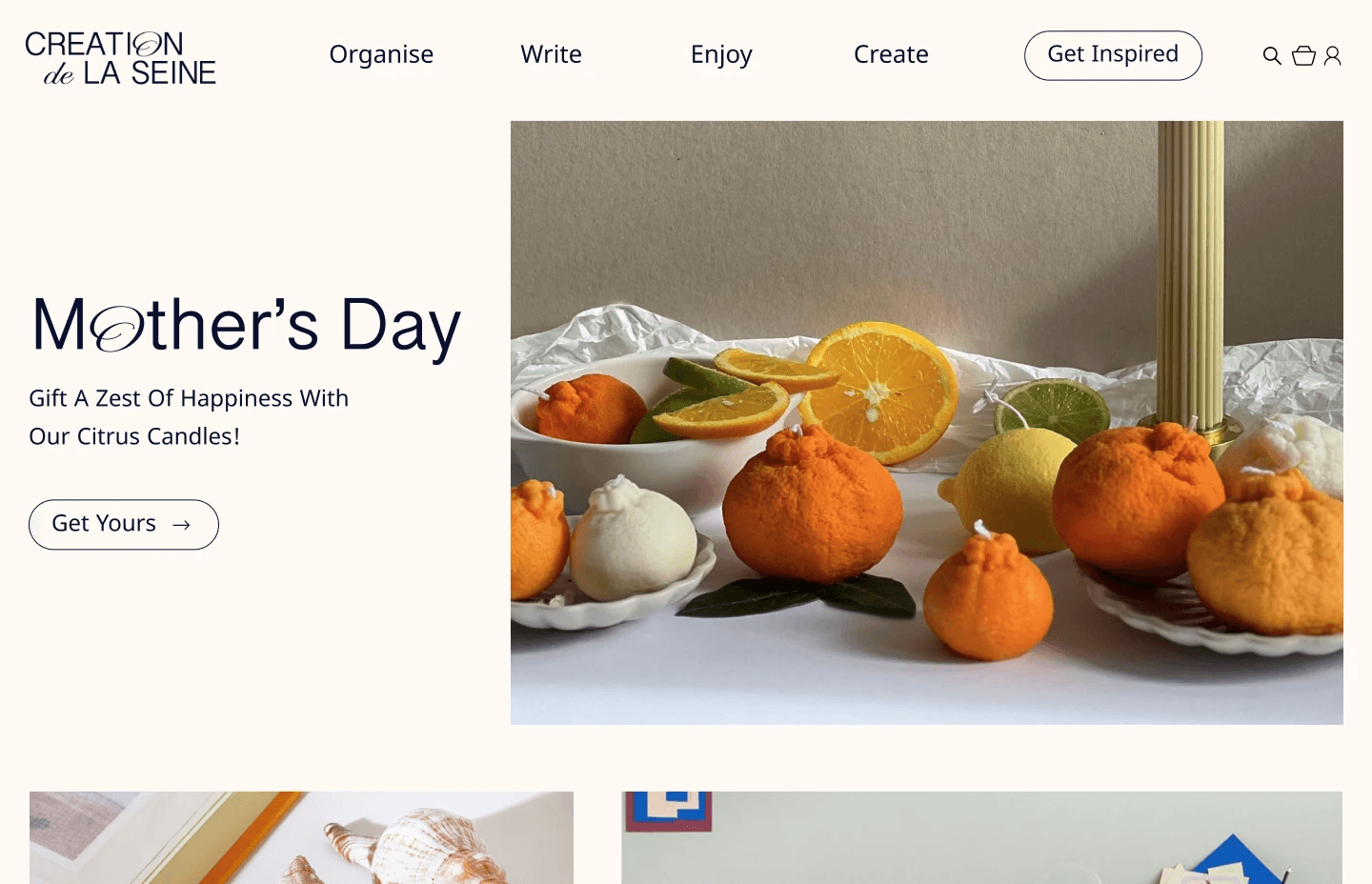

Creations de la Seine
A responsive e-commerce website for a Parisian store, designed to preserve its unique charm and character online.

Les Nuits Secretes
Design of an event companion app for the French festival. Enjoy the fest and stay connected with your squad.